Authentic Japanese food in Singapore is more genuine than most visitors expect — but it is not a perfect replica of what you find in Japan. Singapore’s Japanese dining scene is among the most developed in Southeast Asia, with over 1,000 Japanese restaurants islandwide, but authenticity varies dramatically depending on where you eat, what you order, and how strictly you define “the real thing.”
Is Japanese Food in Singapore Actually Authentic?
Mostly yes, with caveats.
Singapore has a uniquely close culinary relationship with Japan. Direct air links, a large Japanese expatriate community of over 36,000 residents, and a food-obsessed local population have pushed restaurant standards exceptionally high.
Many chefs train in Japan. Ingredients are flown in fresh multiple times a week. Certain high-end omakase counters in Singapore are genuinely comparable to mid-tier restaurants in Tokyo.
But local palates have also shaped menus over decades. Sweeter sauces, milder broths, and fusion-leaning dishes exist everywhere. Knowing the difference is the whole game.
What Makes Japanese Cuisine “Authentic” in the First Place?
Authenticity in Japanese food comes down to four pillars: technique, ingredients, seasonality, and intent.
A bowl of ramen made with tonkotsu broth simmered for 18 hours, using imported Japanese pork bones and thin Hakata-style noodles, is authentic regardless of which country it is served in.
A bowl thickened with cream and topped with processed cheese is not, even if it is made by a Japanese chef.
The distinction matters because Singapore has both kinds, often in the same mall, at vastly different price points.
How Does the Japanese Restaurant Scene in Singapore Compare to Japan?
Singapore’s Japanese restaurants’ authentic dining scene punches well above its weight globally.
According to the Singapore Tourism Board, Japanese cuisine consistently ranks among the top three most popular foreign cuisines in the country. The island hosts everything from casual conveyor-belt sushi chains to multi-Michelin-starred omakase experiences.
For context: Singapore had four Japanese restaurants listed in the Asia’s 50 Best Restaurants rankings as of recent years, a figure that rivals cities many times its size.
High-end establishments source fish directly from Tsukiji and Toyosu markets. Wagyu beef is imported with proper grading certifications. Some counters fly in seasonal ingredients like Hokkaido uni or Kyushu-grown yuzu to stay aligned with Japan’s culinary calendar.
The gap at this premium tier, between Japan and Singapore food quality, is genuinely narrow.
Where Does Singapore’s Japanese Food Fall Short?
The authenticity gap widens most at the mass-market level.
At casual chains and food court stalls — and Singapore has many — compromises are standard. Sushi rice is sometimes over-vinegared or too soft. Ramen broths at lower price points are frequently made from powder or concentrated paste rather than scratch-cooked bones.
Tempura batter is occasionally too thick or pre-battered and frozen. Miso soup from sachets is common even in mid-range restaurants.
None of this is unique to Singapore. The same shortcuts happen in Tokyo’s tourist districts. But it is worth knowing before you assume every Japanese restaurant here delivers the real deal.
Which Japanese Dishes in Singapore Come Closest to the Real Thing?
Sushi, ramen, and yakitori tend to be the most faithfully executed categories in Singapore.
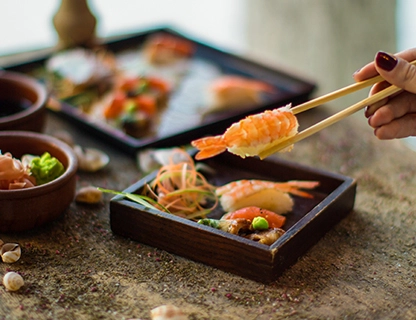
Sushi and Omakase. The omakase format has exploded in Singapore over the past decade. Chefs — many Japanese-trained or Japanese-born — follow the same seasonal sourcing and knife-skills protocols you would find at a reputable Tokyo counter. Price points range from SGD 80 to over SGD 500 per head.
Ramen Singapore’s ramen scene is genuinely excellent. Multiple Japanese chains have opened authentic outposts here, and local Singaporean-run ramen shops have matched them in quality. Tonkotsu, shoyu, shio, and miso variants are all well-represented and technically sound.
Yakitori Specialist yakitori-ya in Singapore follows the binchōtan charcoal method properly. The low-smoke, high-heat technique that gives yakitori its characteristic char and juiciness is replicated faithfully at the better spots.
What About Japanese Food in the Heartlands and Shopping Malls?
Quality varies, but hidden gems exist outside the CBD.
Not all great Japanese food in Singapore is concentrated in Orchard Road or the central business district. Neighbourhood malls and HDB areas have developed strong Japanese dining clusters driven by Japanese residents living outside the city core.
For example, if you are looking for a real Japanese cuisine Singapore experience in the north of the island, the best Japanese restaurants at Northpoint City offer a surprisingly robust selection — from proper donburi to authentic ramen and sushi — that holds up to scrutiny beyond the tourist trail.
Is Japanese Food in Singapore Expensive Compared to Japan?
Yes, typically 20–50% more expensive for equivalent quality.
This is perhaps the most significant real-world gap between Japan and Singapore food experiences.
In Tokyo, a solid bowl of ramen costs around ¥800–¥1,200 (roughly SGD 7–11). The equivalent in Singapore runs SGD 14–22 at a quality ramen-ya. A decent omakase set that costs ¥15,000 in Japan (approximately SGD 140) can run SGD 180–250 in Singapore.
Import logistics, Singapore’s higher cost base, and GST (currently 9%) all add to the bill. That said, the value-for-quality ratio at the high end remains competitive when compared to similar experiences in Hong Kong, Sydney, or London.
Does Singapore Adapt Japanese Food to Local Tastes?
Yes — and it has been doing so for decades.
Singapore’s Japanese food culture is not purely imitative. It has evolved its own hybrid identity over fifty years of Japanese culinary influence. You will find Japanese-Singaporean crossovers that do not exist in Japan: chilli crab temaki, laksa ramen, and mochi with pandan filling are all real menu items at various establishments.
These adaptations are not failures of authenticity. They are their own food culture — and some are genuinely delicious on their own terms.
The key is knowing what you are ordering. A menu that describes itself as traditional Japanese omakase should be held to different standards than a fusion concept that openly blends influences.
What Do Japanese Expatriates in Singapore Actually Think?
Most report that top-tier spots satisfy, mid-range disappoints.
Singapore’s Japanese community is large and vocal. Informal surveys and expat forums consistently show that long-term Japanese residents in Singapore rate the high-end dining as satisfying — sometimes noting that certain seasonal ingredients are more accessible in Singapore because they are not competing with Japan’s overwhelming domestic demand.
The frustration tends to come with everyday eating. Finding the equivalent of an SGD 10 teishoku set — a complete, freshly made Japanese meal at a neighbourhood price — is genuinely difficult in Singapore. That casual, affordable, everyday Japanese eating culture has not fully transplanted here.
How to Find the Most Authentic Japanese Food in Singapore
Follow these markers when choosing where to eat.
Look for Japanese-speaking staff or a Japanese owner. This is not foolproof, but it remains the strongest signal of serious intent.
Check whether the restaurant imports specific-origin ingredients. Menus that name the prefecture — Hokkaido scallops, Miyazaki wagyu, Kagoshima kurobuta — signal that the kitchen cares about provenance.
Look at the lunch crowd. Japanese restaurants favoured by Japanese office workers and residents during lunch hours tend to be the most consistent in quality and the least inflated in price.
Avoid places where the menu spans every Japanese sub-cuisine simultaneously — sushi, ramen, teppanyaki, and donburi all on one page is a warning sign of a kitchen trying to serve everyone and mastering nothing.
The Honest Verdict on Real Japanese Cuisine Singapore
Singapore offers some of Asia’s finest Japanese dining at the top end, with predictable compromises in the middle and lower tiers.
For Japanese food enthusiasts and serious foodies, Singapore is not a consolation destination — it is a genuine one. The omakase scene alone justifies a dedicated food itinerary. The ramen options are better than in most Western cities. Yakitori and izakaya culture have taken genuine root.
Tourists visiting Singapore can eat Japanese food with confidence, provided they are selective. Use the markers above, budget appropriately, and distinguish between restaurants serving authentic cuisine versus those selling the aesthetic of Japanese food without the substance.
The city-state’s obsession with quality eating, its direct supply chains to Japan, and its large Japanese community create conditions that few other countries outside Japan can match.
Final Thoughts
Singapore’s Japanese food scene is one of the most underrated culinary stories in Asia. It is not Japan — and it should not pretend to be. But at its best, it stands independently as a world-class Japanese dining destination shaped by both rigorous tradition and Singapore’s own extraordinary food culture.
Whether you are a first-time tourist or a regular foodie exploring the island, resources like Top in Singapore help you navigate the very best options across neighbourhoods, budgets, and cuisine styles — so you spend less time guessing and more time eating well.