Authentic Italian food Singapore restaurants serve relies on a handful of high-quality, often imported ingredients, simple cooking techniques, and centuries-old regional recipes that are rarely altered. Westernised Italian food, on the other hand, is adapted with extra cream, cheese, sugar, and bolder seasoning to suit local tastes and ingredient availability.
The difference isn’t just about taste — it reflects two entirely different food philosophies. Real Italian cooking lets two or three good ingredients do all the talking. Local adaptations, by contrast, often layer on richness, sweetness, and visual flair to please a wider crowd.
If you’ve ever wondered why your carbonara tasted more like an alfredo, or why your “authentic” pizza arrived dripping in extra cheese, this guide breaks down exactly what separates real Italian food Singapore diners can find from its Westernised cousin — and how to tell them apart at your next meal.
What Is “Authentic” Italian Food, Exactly?
Authentic Italian food refers to dishes prepared using traditional regional recipes, classic techniques, and ingredients that are either imported from Italy or sourced to match Italian quality standards.
It isn’t about fancy plating or expensive price tags. A plate of cacio e pepe — just pasta, pepper, and Pecorino Romano — is as authentic as a multi-course tasting menu, provided the technique and ingredients are right.
Authenticity also varies by region. A Sicilian dish tastes very different from a Tuscan or Roman one, because Italy’s regions each have their own ingredients, dialects, and culinary traditions. This is one reason Italian cuisine in Singapore restaurants can look so varied from one menu to the next — there’s no single “correct” Italian flavour profile.
What Counts as “Westernised” Italian Food in Singapore?
Westernised Italian food is Italian-inspired cuisine that has been adjusted — sometimes heavily — to suit local palates, ingredient availability, and dining expectations.
This often means richer sauces, more cheese, sweeter tomato bases, and larger portions than you’d typically find in Italy. Think creamy carbonara loaded with cream (a sauce that traditionally contains no cream at all), or pizza piled high with toppings rather than the restrained two or three ingredients found in Naples.
None of this makes the food “bad.” Westernised Italian food has its own appeal, and many diners genuinely prefer it. But it is a distinct category from the dishes served in Italian homes and trattorias — and it’s one of the clearest Italian food differences worth knowing before you order.
How Do the Core Ingredients Differ?
This is where the gap between real and adapted Italian cooking becomes most obvious.
Authentic Italian kitchens typically prioritise:
- Tipo 00 flour for fresh pasta
- San Marzano tomatoes for sauces
- Parmigiano Reggiano or Pecorino Romano, aged and imported
- Extra virgin olive oil rather than butter or vegetable oil
- Fresh herbs used sparingly — basil, parsley, sage
Westernised versions often substitute:
- Regular or pre-made pasta
- Canned, generic, sometimes pre-sweetened tomato sauce
- Processed cheese blends or excess mozzarella
- Cream or butter as a flavour shortcut
- Heavier garlic, chilli, or sugar to boost flavour
Singapore’s dining scene has grown fast enough that ingredient sourcing now matters more than ever for diners trying to tell the two apart. The number of international cuisine restaurants in Singapore grew by roughly 25% between 2020 and 2023, with Italian food consistently ranking among the most popular choices — meaning more options, but also a wider quality range to navigate.
Why Does Pasta Taste So Different Between the Two?
If you’ve eaten pasta in Italy and then ordered “the same dish” in Singapore, you’ve probably noticed it tastes lighter, less saucy, and more textured. That’s intentional.
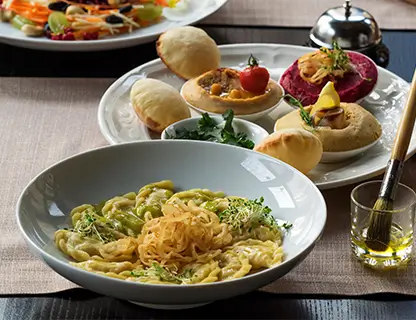
In authentic Italian cooking, pasta is cooked al dente — firm to the bite — and tossed directly in a small amount of sauce, never drowned in it. The sauce-to-pasta ratio is deliberately light, letting the pasta’s texture and the sauce’s flavour balance each other.
Westernised Italian restaurants frequently do the opposite: more sauce, softer pasta, and a heavier hand with cream or cheese to create a more indulgent, comforting bite. It’s a different eating experience entirely — neither is “wrong,” but only one reflects how pasta is actually eaten across most of Italy.
How Does Pizza Differ Between Authentic and Local Styles?
Real Neapolitan pizza is simple by design: a thin, slightly charred crust, San Marzano tomato sauce, fresh mozzarella, and maybe one or two more toppings. It’s traditionally cooked in a wood-fired oven at extremely high heat for around 60 to 90 seconds.
Westernised pizza in Singapore tends to favour thicker crusts, generous cheese, and a long list of toppings — from seafood to barbecue chicken to truffle everything. It’s built for variety and indulgence rather than restraint.
Both styles have a place on the island, and Singapore’s pizza scene reflects that diversity well. But if you’re after the real Neapolitan experience, look for a restaurant that specifically references wood-fired ovens, imported flour, or DOP-certified ingredients.
Why Do Sauces Taste Different in Real vs Local Italian Restaurants?
Sauces are arguably where the difference is most pronounced, because sauce-making philosophy in Italy is built around restraint.
A traditional marinara is just tomatoes, garlic, olive oil, and salt — cooked briefly, not all day. A traditional bolognese is slow-cooked with minimal tomato, built mostly on meat, wine, and milk.
Local adaptations often sweeten tomato sauces, thicken them with extra paste, or fold in cream to make them richer and more universally appealing. This isn’t laziness — it’s a calculated response to what local diners tend to enjoy. But it does mean the sauce on your plate may bear only a loose resemblance to its Italian origin.
Does Real Italian Food Use Less Cheese and Cream Than People Expect?
Yes — and this often surprises first-time visitors to Italy.
Many classic Italian dishes use cheese as a finishing touch, not a primary ingredient. A sprinkle of Parmigiano, a few shavings of Pecorino — that’s often it. Cream, meanwhile, barely appears in traditional Italian cooking at all; it’s far more associated with French cuisine, despite being widely (and incorrectly) linked to Italian food in people’s minds.
Westernised Italian restaurants in Singapore tend to use both far more generously, which contributes to the richer, heavier mouthfeel many diners associate with “indulgent” Italian meals.
Does the Dining Structure Differ Too, Not Just the Food?
Yes — and this is one of the more overlooked Italian food differences for diners unfamiliar with how meals work in Italy.
A traditional Italian meal is built around courses: antipasto (starter), primo (a pasta, rice, or soup course), secondo (a protein-based main, usually with a small side), and dolce (dessert). Each course is modest in size, because the meal is meant to unfold slowly across several plates rather than centre on one large dish.
Most Western-style dining in Singapore, including many Italian restaurants, condenses this into a single main course with a generous portion, sometimes paired with bread or a side salad. It’s a more efficient format for a lunch break or a quick dinner, but it changes how the food is meant to be experienced.
This is also why an authentic Italian pasta portion can look surprisingly small on the plate. It isn’t meant to be the entire meal — it’s one course among several, calibrated accordingly.
Is Westernised Italian Food “Fake” Italian Food?
Not exactly. It’s more accurate to think of Westernised Italian food as a localised evolution rather than an imitation.
Cuisines almost always change when they travel. Italian immigrants adapted their cooking abroad decades ago, which is partly why dishes like creamy alfredo or heavily sauced spaghetti and meatballs barely resemble anything you’d order in Rome or Bologna. Singapore’s Italian food scene has gone through a similar process, shaped by local tastes, ingredient access, and decades of fusion influence.
So while Westernised Italian food isn’t strictly traditional, it isn’t inauthentic in a dismissive sense either — it’s simply a different culinary lineage that happens to share a name with the original.
Do Herbs and Seasoning Play a Role in the Difference?
Yes, and it’s an easy thing to overlook while eating.
Authentic Italian cooking tends to use fresh herbs sparingly, added at the right moment to preserve their aroma — basil torn over a finished dish, parsley stirred in at the last minute, rosemary infused gently into oil. The goal is fragrance, not overpowering flavour.
Westernised Italian cooking in Singapore often leans on stronger, more assertive seasoning: extra garlic, chilli flakes, or dried herb blends used generously throughout cooking rather than as a finishing note. This produces a punchier, more immediately flavourful dish, which suits palates accustomed to bolder local cuisines.
Neither approach is more “correct” on its own — they simply reflect different seasoning traditions built for different audiences.
How Can You Tell If an Italian Restaurant in Singapore Is Authentic?
A few practical signs can help you spot the real deal:
- Imported ingredients are named on the menu — San Marzano tomatoes, Tipo 00 flour, DOP cheeses, or specific regional references such as Amalfi, Puglia, or Sicily.
- The menu is shorter, not longer. Authentic Italian menus tend to focus on doing fewer dishes well, rather than offering everything.
- Portions are moderate, not oversized. Italian dining is built around multiple courses, not one giant plate.
- Italian or Italian-trained chefs lead the kitchen.
- Certifications matter. A small number of Singapore restaurants have earned recognitions like the Ospitalità Italiana Gold Seal, an official mark awarded to establishments abroad that meet strict standards for authentic Italian cuisine.
If you’re exploring options, this guide to Italian restaurants in Singapore is a useful starting point for finding spots that lean toward genuine regional cooking rather than fusion-style adaptations.
Why Does the Difference Actually Matter to Diners?
For Italian food lovers and curious diners alike, understanding this difference isn’t about gatekeeping — it’s about knowing what to expect and choosing what suits the occasion.
Sometimes you want the rich, indulgent, crowd-pleasing version. Other times, you want the quieter, ingredient-led experience that reflects how Italians actually eat at home. Singapore’s dining scene has expanded enough to comfortably offer both, with the local restaurant sector seeing steady turnover growth driven partly by demand for more diverse and elevated dining experiences.
Knowing the difference simply means you can order with intention — and appreciate each style for what it is, rather than judging one against the other.
Final Thoughts
Authentic Italian food and Westernised Italian food aren’t competitors — they’re two different answers to the same question: how do you bring Italy’s culinary traditions to a new audience?
One stays close to the source. The other adapts boldly for local tastes. Both can be delicious in their own right, and any good Italian restaurant Singapore diners frequent will usually tell you, upfront, which experience it’s offering.
If you’re planning your next Italian meal out, Top in Singapore restaurant guides can help you find the right spot — whether you’re craving an authentic, ingredient-led trattoria experience or a more indulgent, Westernised comfort meal.