1. Thinkific
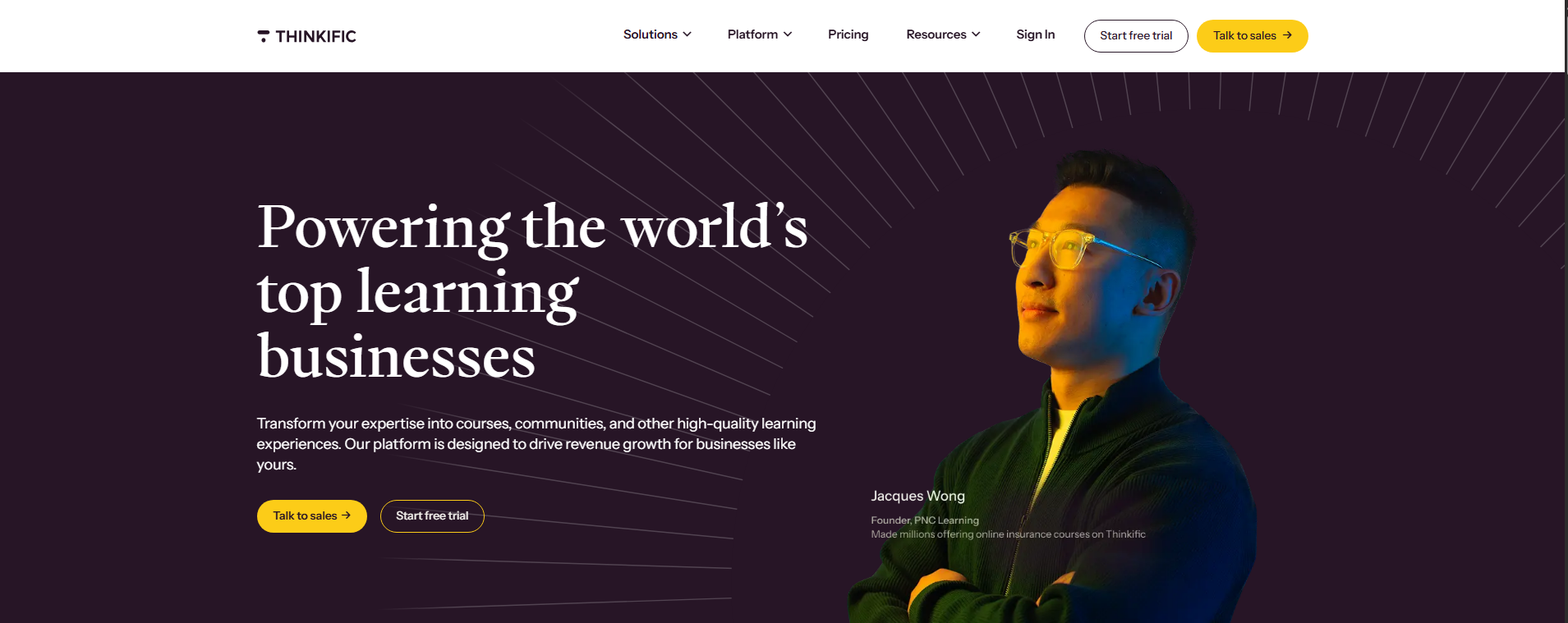
Thinkific helps creators design and sell free teaching programmes and courses with ease. It’s a platform for building customised learning experiences. You don’t need technical skills. Its drag-and-drop editor makes course creation simple. Thinkific works for individuals, businesses, and educators alike. It supports various media like videos, quizzes, and PDFs. It’s great for monetising skills or teaching a team. You can also explore Thinkific Academy for tips on pricing and marketing courses. Thinkific is all about flexibility, letting creators focus on content, not the tech.
Pros & Cons
| Pros |
Cons |
- Easy to use with no coding required.
- Excellent for creating custom courses.
- Free tools for new creators.
|
- Does not have a pre-made course library.
|
Why We Picked It
Thinkific is perfect for those who want to create and sell unique courses. It’s reliable, flexible, and great for small businesses or creators.
Courses
- Business and Entrepreneurship
- Personal Development
- Technology and Programming
- Health and Wellness
- Creative Skills
- Coaching and Webinars & more.
Price
| Course |
Price |
Basic
Get the key features and expert support you need to grow your learning business. |
$36/mo |
Start
Access tools designed to increase customer engagement and accelerate revenue. |
$74/mo |
Grow
Take your learning business further with added support, expanded limits, and advanced commerce tools to increase revenue. |
$149/mo |
Thinkific Plus
Scale with pro features, enterprise tools, and tailored support. Book a call for your custom quote. |
Talk to Sales |
For more details, visit their website.
2. Coursera
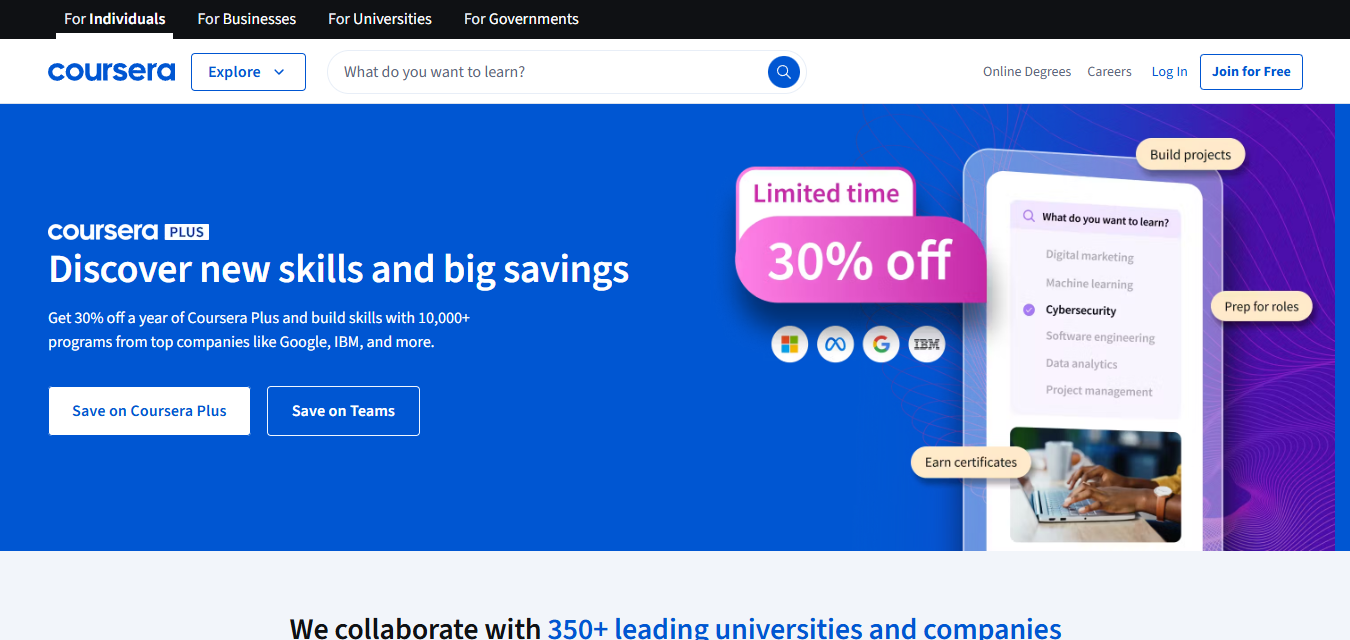
Coursera offers online courses from top universities like Yale and Stanford. It has options for certificates and degrees in various subjects. You can learn skills for career growth or explore new hobbies. Courses are self-paced, allowing flexibility for learners. It offers content in arts, tech, science, and more. Certificates from Coursera are widely recognised by employers. It’s a great choice for formal education without high costs. Subscriptions offer access to many courses, making it budget-friendly for consistent learners.
Pros & Cons
| Pros |
Cons |
- Offers accredited certificates.
- Free courses available.
- Wide subject variety.
|
- Free courses lack certificates.
- Some courses are time-bound.
|
Why We Picked It
Coursera bridges the gap between traditional education and affordability. It’s ideal for learners seeking credentials from trusted institutions.
Courses
- Data Science
- Business and Entrepreneurship
- Computer Science
- Health and Medicine
- Social Sciences
- Arts and Humanities & more..
Price
Courses start at £8. Subscriptions are £47/month or £320/year.
For more details, visit their website.
3. LinkedIn Learning
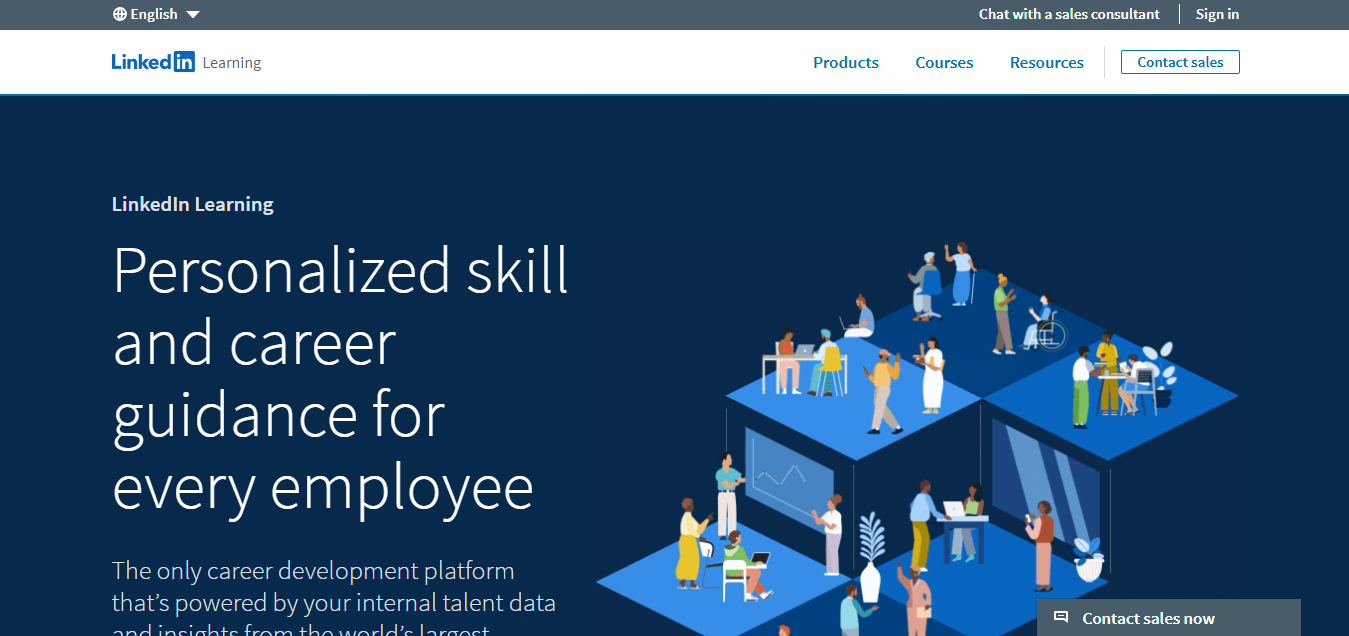
LinkedIn Learning focuses on professional skills. It offers courses in business, technology, and creativity. Over 17,000 courses are available. You can easily add certificates to your LinkedIn profile, boosting job prospects. Lessons cover practical topics like software tools and team management. It’s great for career-oriented learning. Subscriptions include access to LinkedIn Premium for job searching and networking. Businesses can also purchase team subscriptions for employees. It’s an all-in-one platform for professionals looking to upskill.
Pros & Cons
| Pros |
Cons |
- Thousands of courses.
- Certifications integrate with LinkedIn.
- User-friendly for professionals.
|
- Requires a LinkedIn account.
|
Why We Picked It
LinkedIn Learning is ideal for career-focused professionals. It combines learning with networking opportunities.
Courses
- Business Skills
- Data Science
- Programming and Development
- IT Certifications
- Project Management Certifications
- Graphic Design & more..
Price
£33/month or £200/year.
For more details, visit their website.
4. Skillshare
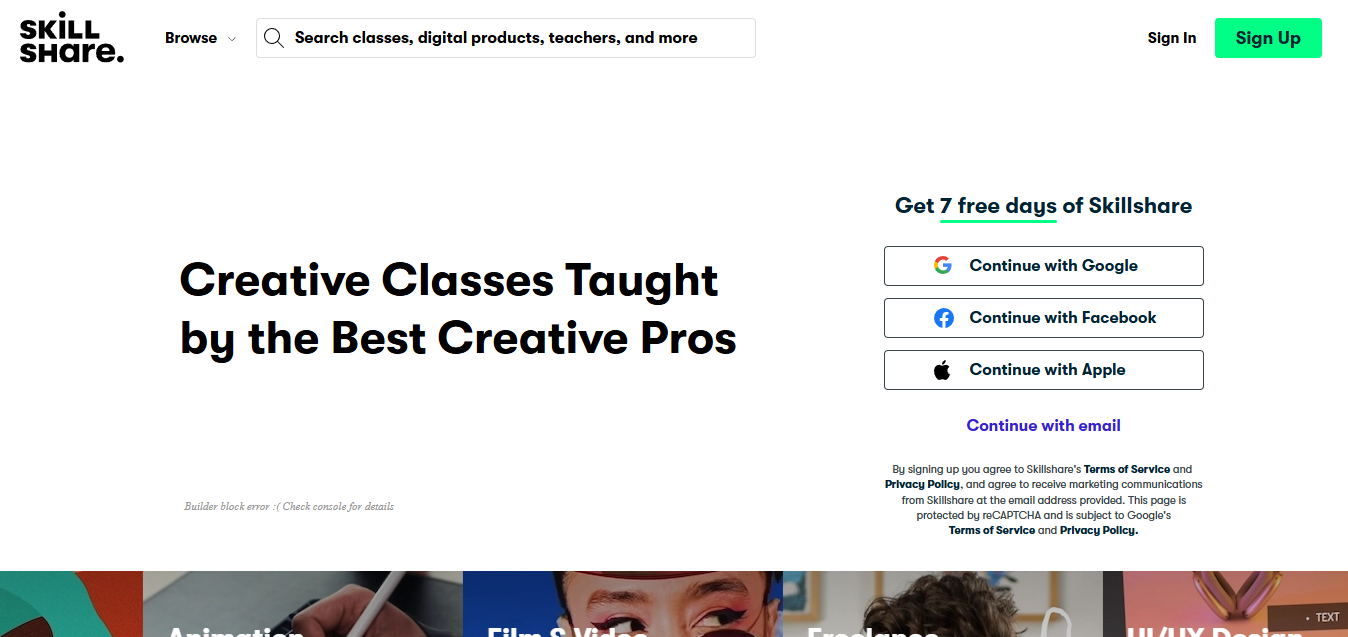
Skillshare is designed for creative learners. It has courses on topics like design, photography, and crafts. Courses are taught by real-world creatives, making lessons relatable. The online training platform is project-based, helping learners apply new skills quickly. It’s flexible and accessible, with a mobile app for learning on the go. However, most courses are introductory and lack depth. It’s great for hobbyists or professionals seeking creative inspiration. Skillshare’s annual subscription is affordable for its extensive library.
Pros & Cons:
| Pros |
Cons |
- 35,000+ creative courses.
- Learn from real-world instructors.
- Accessible via app.
|
- Courses can feel shallow.
- Instructors may lack formal training.
|
Why We Picked It
Skillshare stands out for creative learners. It’s simple, accessible, and packed with fun, hands-on projects.
Courses
- Graphic Design
- Data Science
- Web Development
- Culinary Arts
- Health & Wellness & more..
Price
£12/month or £145/year.
For more details, visit their website.
5. edX
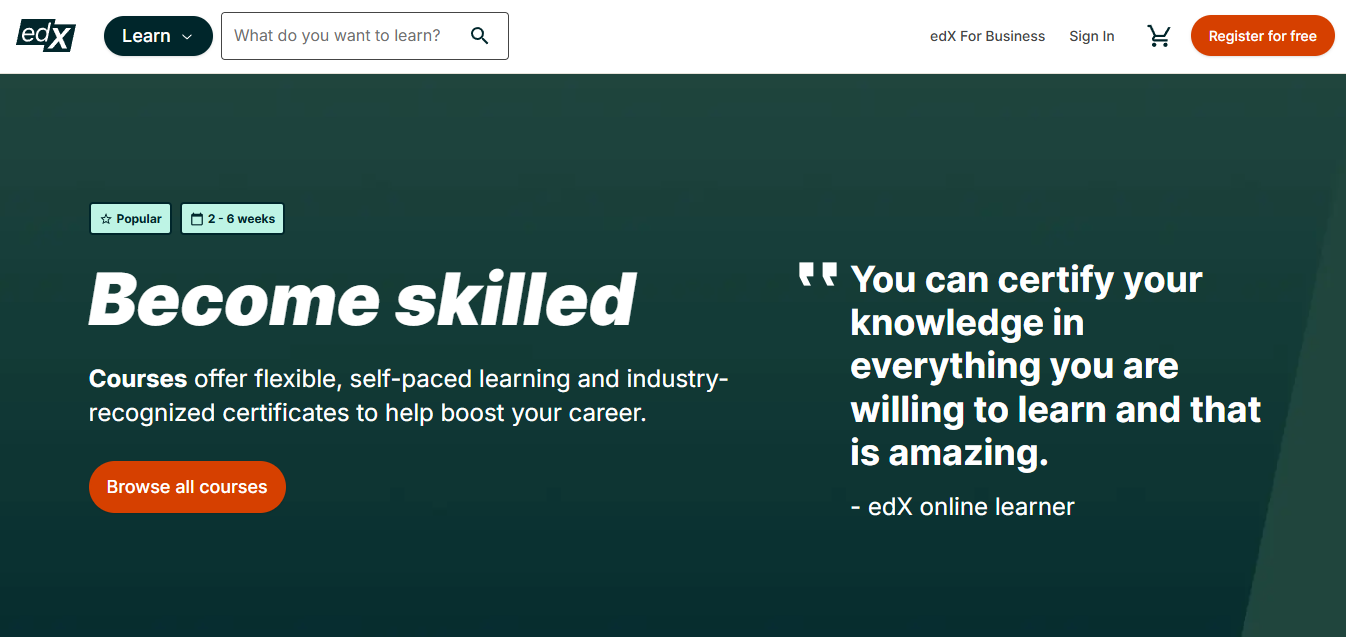
edX offers university-level courses from institutions like Harvard and MIT. It’s a go-to for formal education at a lower cost. The online learning platform focuses on science, technology, and business topics but also offers humanities courses. You can earn certificates, professional credentials, or even full degrees. Most courses are self-paced, giving flexibility to learners. The courses are well-structured and include top-notch content. edX is great for professionals and students looking to deepen their knowledge.
Pros & Cons
| Pros |
Cons |
- High-quality academic content.
- Partnerships with Ivy League universities.
- Affordable degrees.
|
- Limited creative course options.
|
Why We Picked It
edX is a trusted platform for learners who want credible education from world-renowned universities.
Courses
- Artificial Intelligence
- Machine Learning
- Programming Languages (Python, Java, etc.)
- Data Analysis
- Project Management
- Business Analytics & more.
Price
Free courses available. Certified courses cost £40–£250. Degree programmes are £800+.
For more details, visit their website.
6. OpenLearning
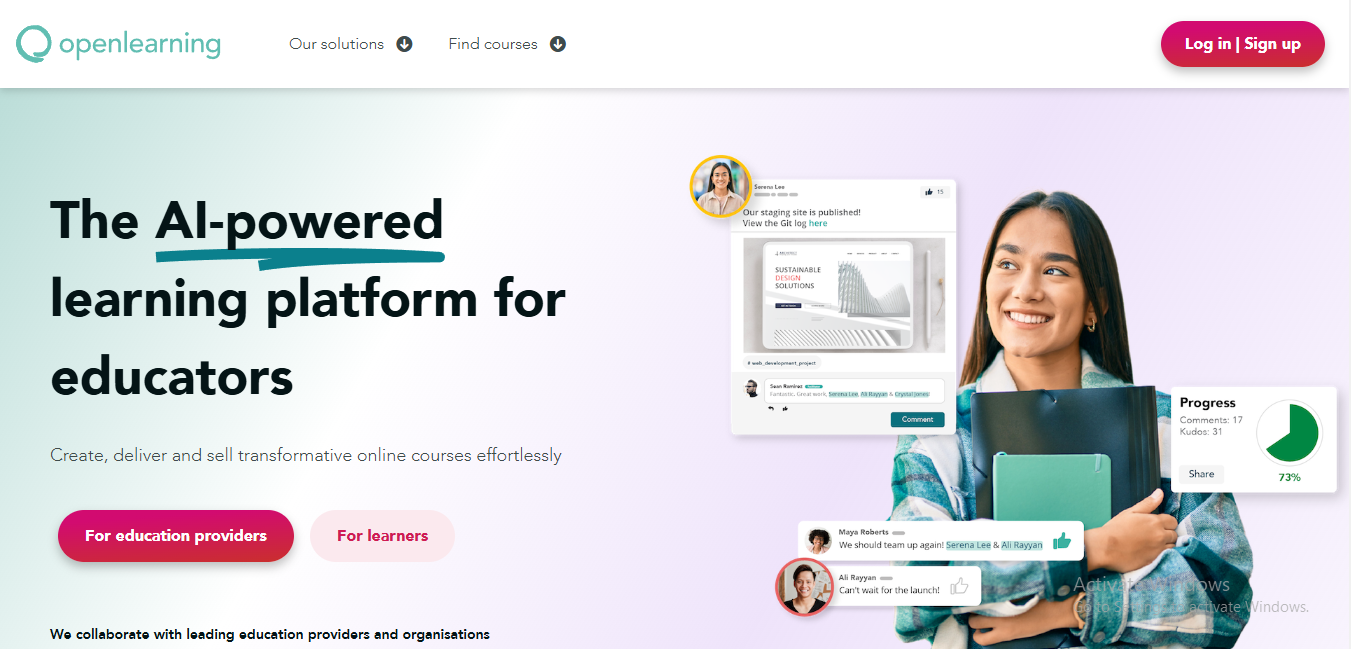
OpenLearning focuses on collaborative and community-driven learning. It’s widely used in Australia but serves learners worldwide. Courses are interactive, promoting engagement through discussions and group work. It offers micro-credentials that can lead to university credits. The platform is powered by AI to enhance learning experiences. It’s particularly useful for professional and academic development. OpenLearning is ideal for those who value a mix of education and social interaction.
Pros & Cons:
| Pros |
Cons |
- Strong community focus.
- Supports microcredentials for degrees.
- AI-enhanced features.
|
|
Why We Picked It
OpenLearning combines social interaction with quality education. It’s great for learners seeking a collaborative environment.
Courses
- CS101 Series (Data Structures, Programming, Problem Solving)
- Business and Management
- Education and Teaching & more..
Price
Free courses available. Microcredential courses start at £120.
For more details, visit their website.
7. Udemy
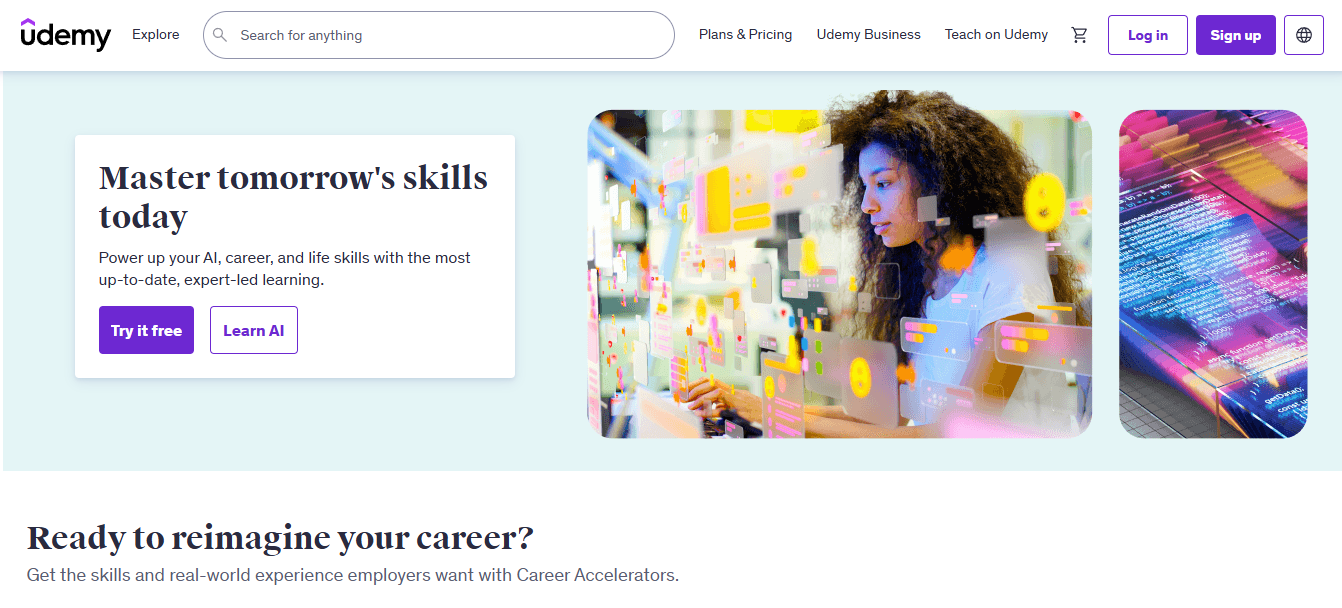
Udemy has the largest library of online courses, covering personal and professional skills. Courses range from £8 to £160, making learning accessible to all budgets. You pay per course, with no subscription required. Content varies from tech to personal development. However, the quality depends on the instructor, as there’s minimal vetting. Udemy’s flexibility lets you learn at your own pace. It’s perfect for one-off learning or exploring new hobbies.
Pros & Cons
| Pros |
Cons |
- Huge course selection.
- Affordable.
- Lifetime access to purchased courses.
|
- Quality varies.
- No formal credits.
|
Why We Picked It
Udemy’s affordability and vast options make it a favourite for learners of all interests.
Courses
- Web Development
- Data Science
- Programming Languages (Python, Java, C++)
- Finance and Accounting & more.
Price
| Course |
Price |
Personal Plan
For You
(Individual) |
S$18.70 /month |
Team Plan
For your team
2 to 20 people |
S$40.00 /month/user |
Enterprise Plan
For your whole organisation
More than 20 people |
Contact Sales |
For more details, visit their website.
8. Treehouse
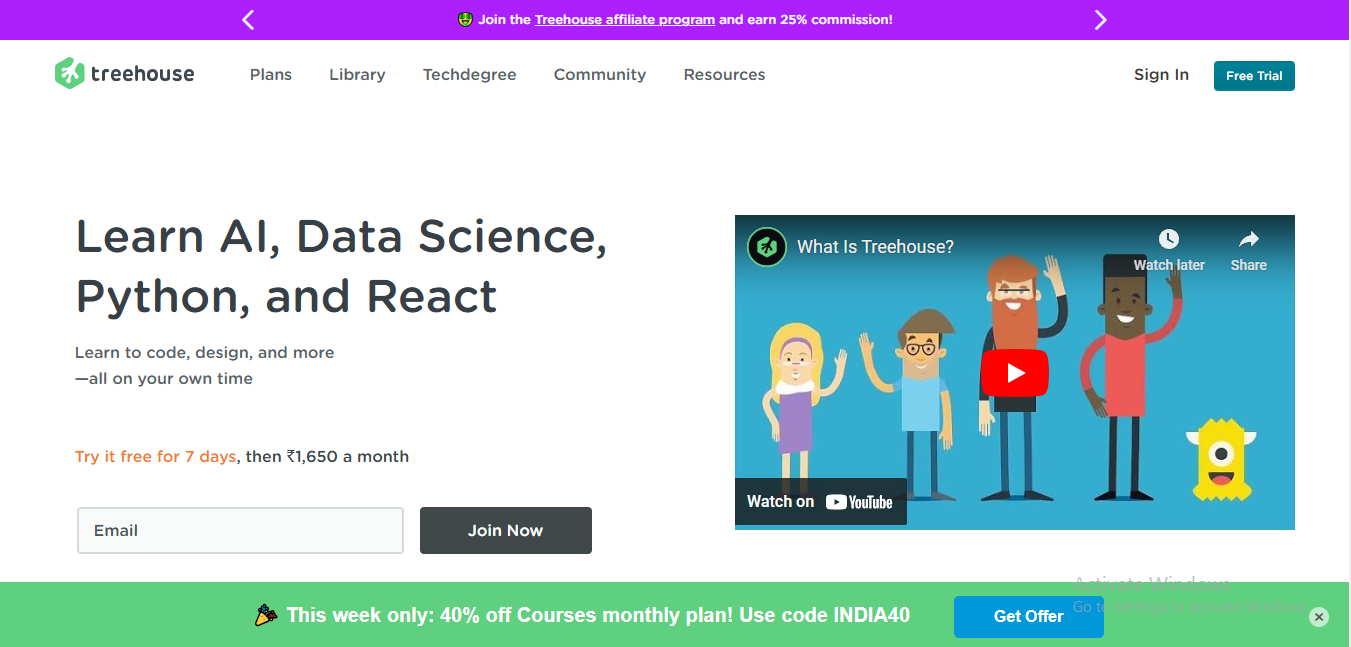
Treehouse is all about coding and tech skills. It’s beginner-friendly, offering courses on web development, cybersecurity, and app design. Lessons are project-based, ensuring hands-on learning. Treehouse includes a built-in text editor for coding practice. Techdegree programmes offer certifications, preparing learners for tech careers. Its affordable pricing makes it accessible for aspiring developers. However, its focus is limited to programming.
Pros & Cons
| Pros |
Cons |
- Practical, hands-on courses.
- Affordable membership plans.
- Offers structured Techdegree certifications.
|
|
Why We Picked It
Treehouse is ideal for tech enthusiasts and aspiring developers. It’s simple, practical, and effective.
Course
- Programming and Development
- Web Design
- Game Development & more..
Price
| Course |
Price |
Courses
Give coding or design a try |
$ 1.33/mo |
Courses Plus
Level up your learning with extras |
$ 2.67/mo |
Techdegree
Get certified in our job-ready bootcamp |
$ 199/mo |
For more details, visit their website.
9. MasterClass
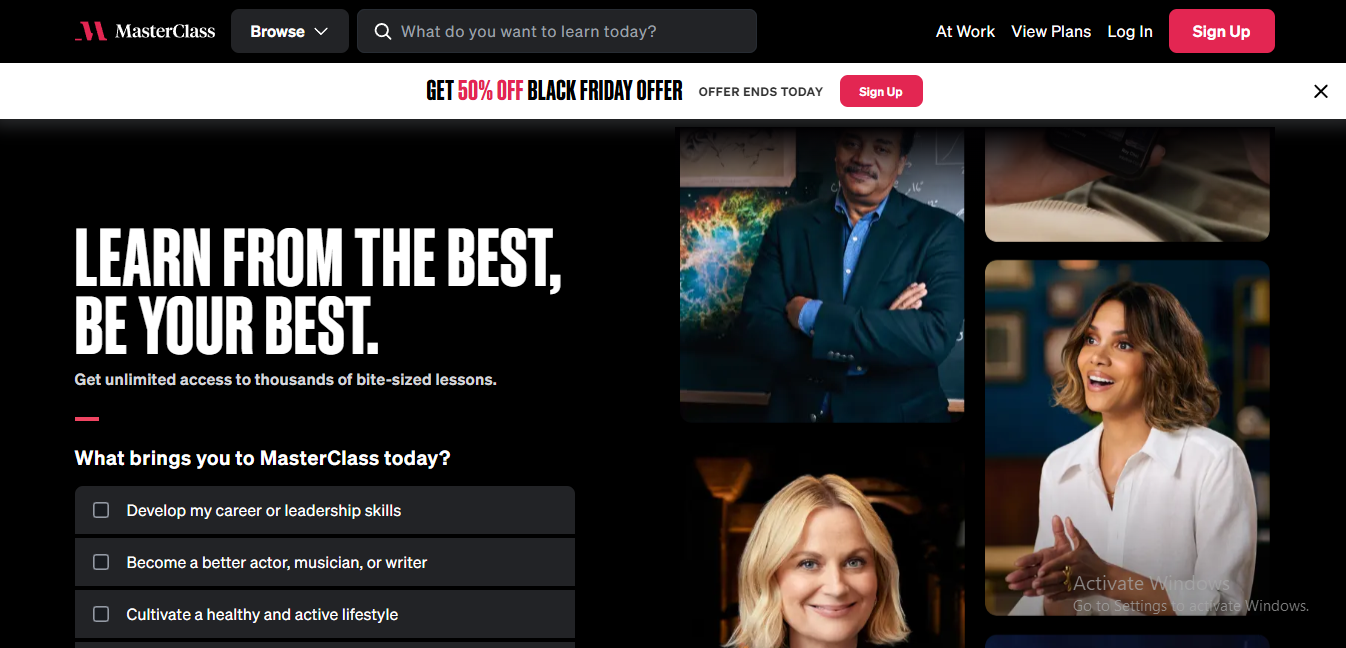
MasterClass offers courses taught by industry leaders and celebrities. Topics include cooking, acting, writing, and leadership. Videos are engaging and high-quality, with expert insights. Courses are introductory, focusing on inspiration rather than mastery. It’s ideal for hobbyists or those seeking unique perspectives. Subscriptions are affordable and offer access to all courses. MasterClass is perfect for curious learners looking for expert advice.
Pros & Cons
| Pros |
Cons |
- Taught by top experts.
- High-quality production.
- Unlimited access to courses.
|
- Limited to beginner-level content.
|
Why We Picked It
MasterClass combines expert insights with stunning visuals, making it a standout for inspiration.
Courses
- Arts and Entertainment
- Business and Leadership
- Gymnastics and Physical Training
- Personal Development
Price
| Course |
Price |
Standard
1 device
No offline mode |
$10.70 |
Plus
2 devices
Offline mode |
$16.05 |
Premium
6 devices
Offline mode |
$21.40 |
For more details, visit their website.
10. Khan Academy
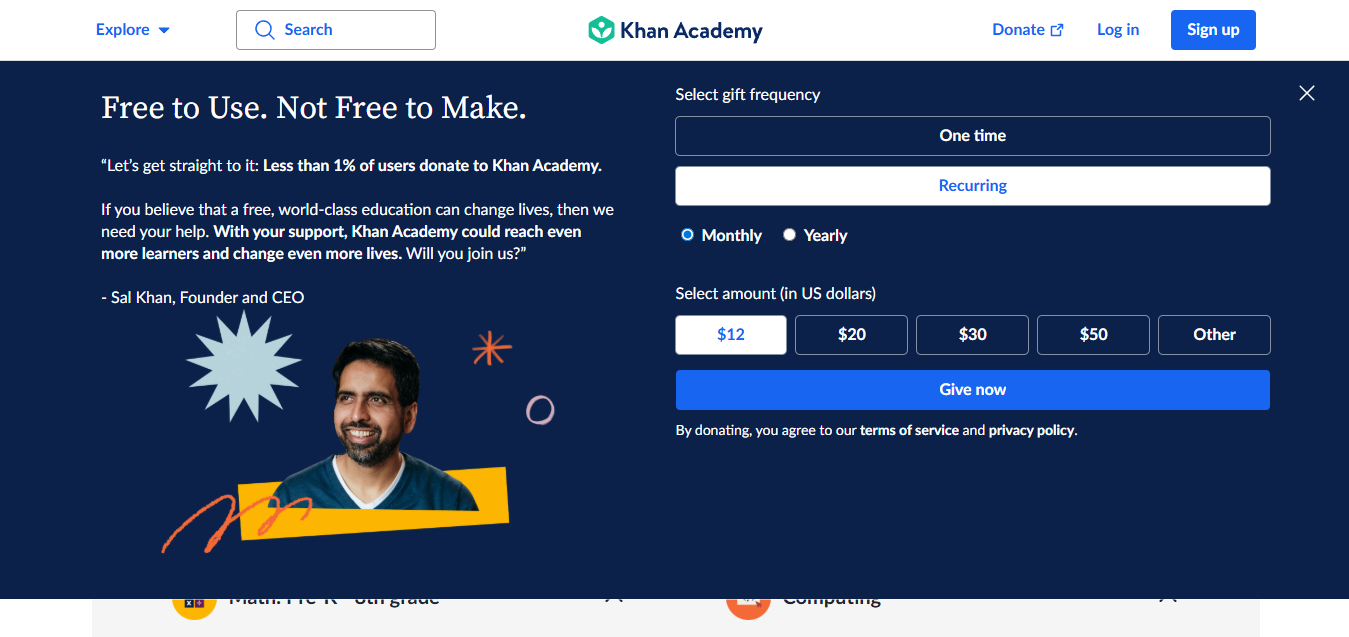
Khan Academy is a free, non-profit platform offering lessons for all ages. It’s best known for K-12 education but also includes test prep and professional skills. Subjects include maths, science, and economics. Lessons are interactive, with quizzes and gamified elements. It’s a great resource for students, parents, and educators. Khan Academy supports foundational learning and lifelong education at no cost.
Pros & Cons:
| Pros |
Cons |
- Completely free.
- Covers various subjects.
- User-friendly for all ages.
|
- Focused on K-12 education.
|
Why We Picked It
Khan Academy makes high-quality education free for everyone. It’s a gift to lifelong learners.
Courses
- Mathematics
- Economics
- Life Skills & more..
Price
Free.
For more details, visit their website.
Tips for Choosing the Right Online Learning Platform
- Decide what skills or knowledge you want to gain.
- Check if the courses match your learning needs.
- Choose platforms offering recognised credentials.
- Compare costs to fit your budget.
- Try free courses or trials to assess quality.
- Pick platforms with easy navigation and tracking tools.
- Engage with active forums for added learning.
Conclusion
In 2026, the growing accessibility and diversity of the best e-learning platforms have revolutionised education, offering learners the opportunity to gain new skills and knowledge from anywhere in the world. Whether you’re looking to develop professional skills, explore creative hobbies, or achieve academic goals, there’s a platform tailored to your needs. By understanding your objectives and preferences, you can select the right platform to enhance your learning experience and unlock your potential. Online education has never been more empowering—start your journey today!